
Don’t think what is my next move , Think is the my third move
Not one. Not fifty. Three.
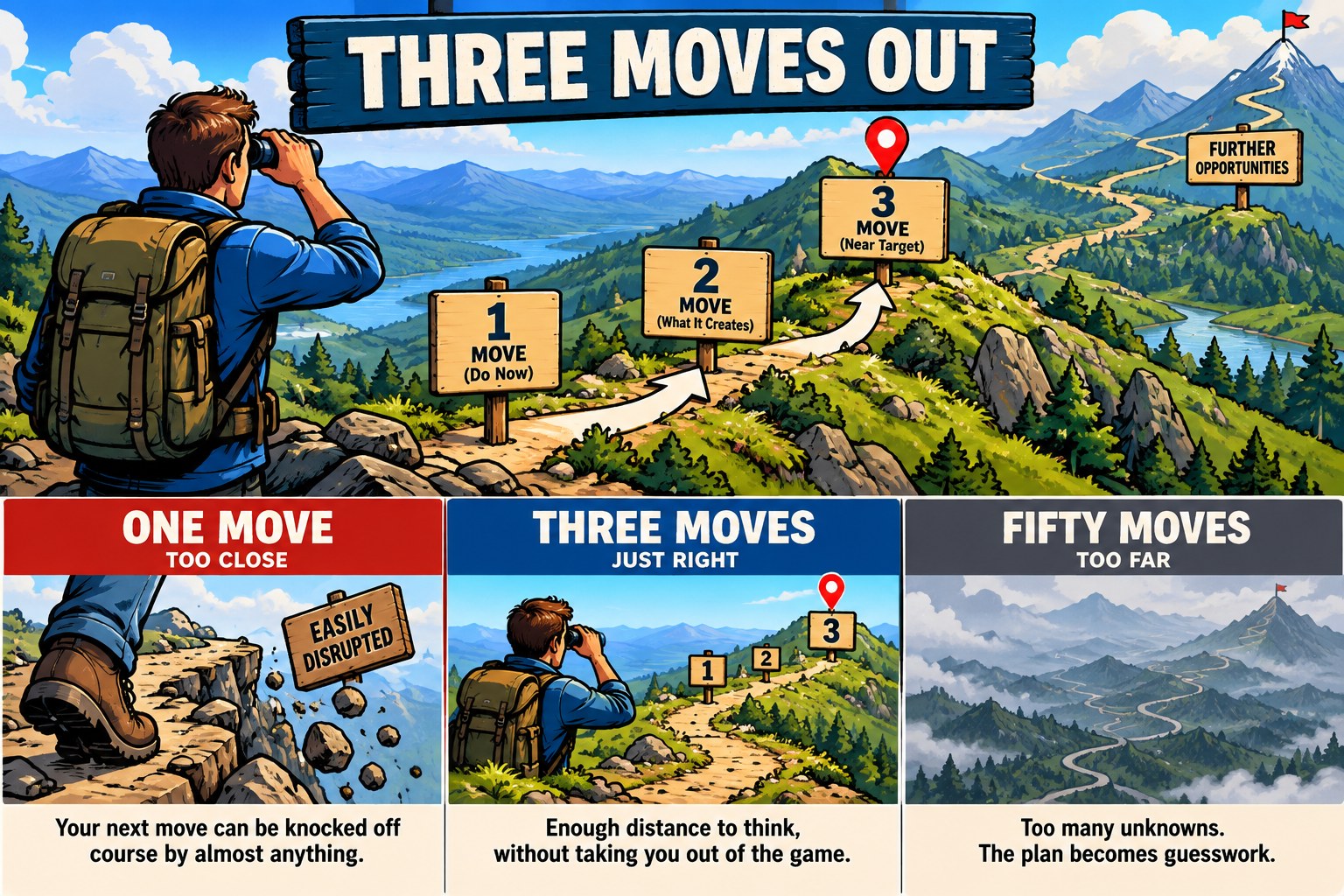
If you only think about your next move, you’re too close to the problem. Almost anything can disrupt it—a change in priorities, someone else’s decision, or an unexpected problem.
But thinking fifty moves ahead creates the opposite problem. There are too many unknowns. The plan becomes based on assumptions about a future you can’t control.
Three moves gives you enough distance to think without taking you out of the game.
Your first move is what you can do now.
Your second move is what that creates.
Your third move becomes your near target.
You don’t need to know exactly how you’ll get there. You just need enough clarity about that third move to judge the decisions in front of you.
When something changes, ask:
“Does this move take me closer to my third move, or farther away from it?”
If it’s closer, keep going. If it’s farther away, adjust.
The point isn’t to predict the future. It’s to create enough perspective to adapt without losing direction.
One move is reaction.
Fifty moves is fantasy.
Three moves is maneuverability.
Add a practical three-move exampleMake the closing more memorable