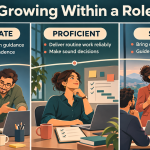
The Degrees of Difference Between Associate, Proficient, and Senior

People progress through different stages as they grow in the same role. Associate, Proficient, and Senior describe those stages, each with its own expectations for independence, judgment, and impact. Associate An Associate is building a reliable foundation in the role. They work toward clear, near-term goals that develop new functional or strategic skills. They receive …

Nobody Is Chalkless

There’s an old saying from the boardwalk: “Everyone on the boardwalk has chalk. Some on their back, some on their fingers, sometimes both, but nobody is chalkless.” The expression comes from the old boardwalk barkers and merchants. A gullible customer, or someone carrying a little too much money, might get marked with chalk on their …

The Triangle of Education: Where Traditional Learning Falls Short

Education is generally understood as the process of acquiring knowledge, developing intelligence, and preparing individuals to use both in the world. But those are not necessarily the same thing, and the distinction matters. I see education as three connected components: Knowledge Attainment, Intelligence Built, and Application Experience. Each serves a different purpose, and each contributes …

Why I Both Respect—and Revile—Guy Fawkes

I respect Fawkes for his ability to rise within a declining cause and become instrumental in bringing someone else’s vision to life. He may not have conceived the Gunpowder Plot, but he became a key figure in translating another person’s vision into an executable plan. There is something to recognize in the ability to understand …

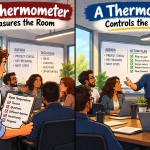
Thermometer vs. Thermostat: Measure the Room or Lead It?

Every room has a temperature. The difference is what you do with it. A thermometer measures and reports. A thermostat uses that information to influence the environment. In a meeting, the thermometer identifies challenges, tension, and progress. The thermostat takes the next step: creating clarity, aligning people, removing blockers, and turning discussion into action. Both …

If You Don’t Say Sorry, Why Do You Say Thank You?

There’s a growing trend to replace “Sorry I’m late” with “Thank you for waiting.” It sounds like a small change, but consider what it implies. “Sorry I’m late” acknowledges that I failed to meet an expectation. “Thank you for waiting” shifts the focus to your patience—as if the problem is how you responded to my …

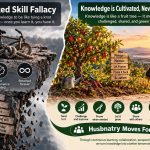
The Fixed Skill Fallacy

We want knowledge to be like tying a knot or riding a bike. Learn it once, and you have it forever. No maintenance, no revision, no further effort required. But knowledge is more like a fruit tree. It must be tended, managed, pruned, and given room to grow. Even with proper care, it may not …

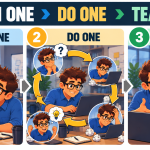
Watch One. Do One. Teach One.

Learning happens when we move from understanding to action. The NHS is associated with the traditional medical training principle of “See One, Do One, Teach One.” The idea is simple: observe someone with experience, try it yourself, then pass the knowledge on. The real power is in the progression. Don’t wait for mastery to take …

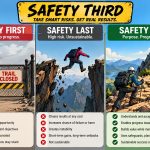
Safety Third

We’ve been taught that safety comes first. It sounds right. It sounds responsible. But there’s a problem with it: If safety is truly first, you can eliminate risk by eliminating action. No risk means no movement.No movement means no progress.And without progress, there is no new value or meaningful outcome. That doesn’t mean safety doesn’t …