Disagree, Agree, or Stay Neutral — Just Don’t Stalemate

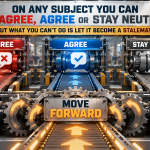
On any subject, you can disagree, agree, or stay neutral. But what you can’t do is let it become a stalemate. Healthy organizations don’t require everyone to think the same. They require people to challenge ideas, understand different perspectives, make decisions, and then move forward. You don’t have to agree. You do have to play …

The Problem With Selective Simplicity

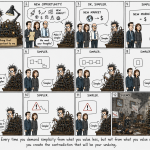
We love to say, “Keep it simple.” But selective simplicity creates a problem. We allow the things we value most to become incredibly complex—because we believe they require expertise, nuance, and sophistication. Then we demand that everything around them be simple. That contradiction costs more than efficiency. It costs trust, integrity, and ultimately your brand. …

Solution Evolution can make many products Without Solving a single Problem.

Solution evolution can be a good thing. We learn, adapt, and improve. But there is a point where evolution becomes substitution—each new solution simply solves the problems created by the previous one. The pattern becomes: Problem → solution → unintended problem → new solution → new unintended problem → repeat. Each step can look reasonable …

The Iron Triangle: You Can’t Have It All

Everyone wants the project delivered faster, cheaper, and with more features. The problem? The laws of project gravity still apply. The Iron Triangle—Scope, Time, and Cost—is one of the simplest ways to understand why projects go sideways. Change one side of the triangle and you put pressure on the other two. Want more scope? You …