
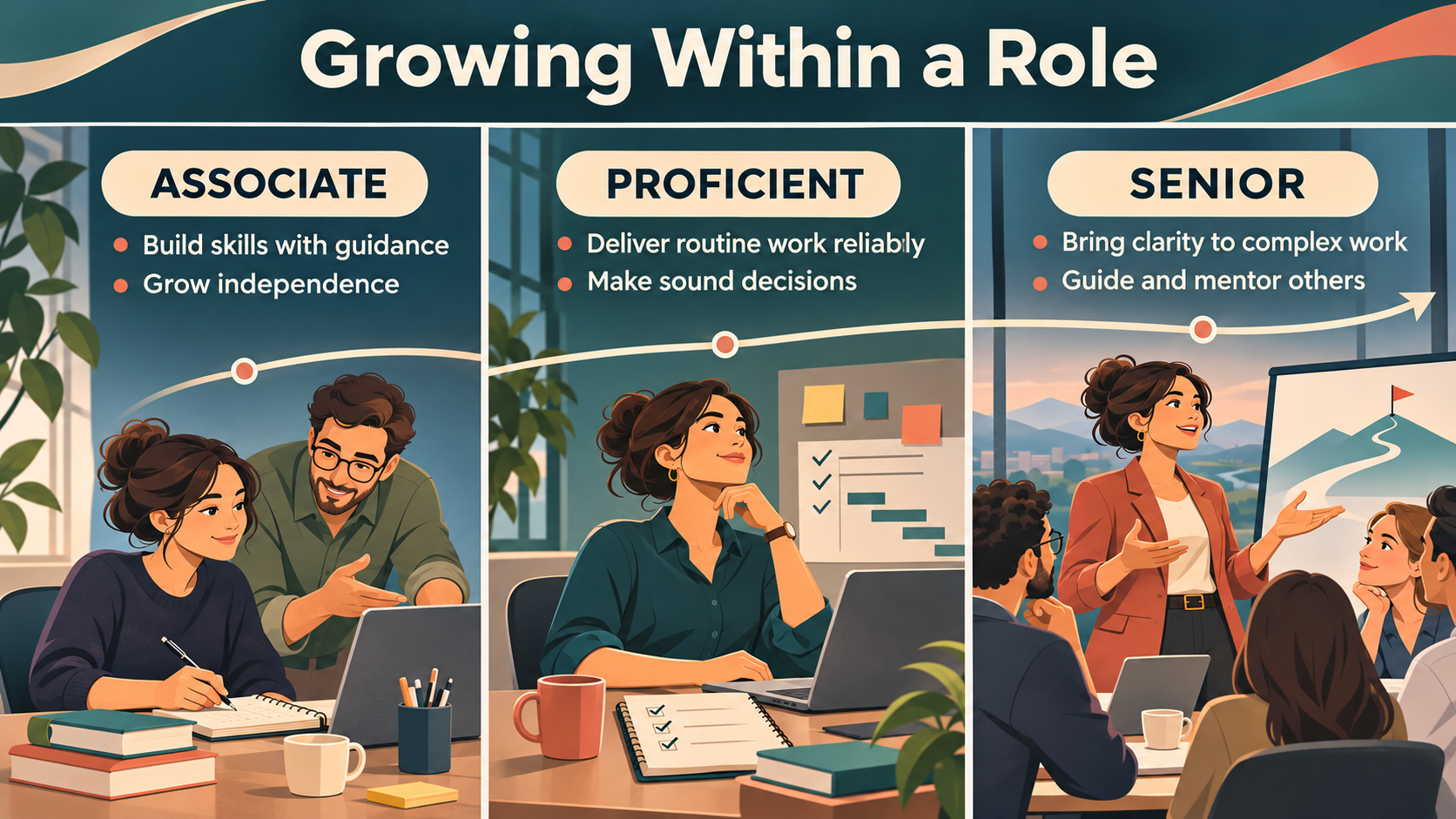
People progress through different stages as they grow in the same role. Associate, Proficient, and Senior describe those stages, each with its own expectations for independence, judgment, and impact.
Associate
An Associate is building a reliable foundation in the role. They work toward clear, near-term goals that develop new functional or strategic skills. They receive strong, direct guidance from multiple people whose direction is coordinated to support the Associate’s growth.
Associates are expected to:
- Complete defined tasks with support.
- Ask questions when requirements or priorities are unclear.
- Apply feedback and build consistency.
- Recognize when a problem is beyond their current experience and seek help.
- Build and start managing their toolbox of skills, methods, and resources.
The focus at this stage is developing sound habits, understanding how the work fits together, and learning what it takes to progress to the Proficient stage. Associates build independence over time and need less help with familiar tasks.
Proficient
A person at the Proficient level handles the core responsibilities of the role consistently and with growing independence. They can manage familiar work from start to finish, make sound decisions within their scope, and identify when a situation needs input from others.
People at the Proficient level are expected to:
- Plan and deliver routine work with limited oversight.
- Make practical decisions and explain their reasoning.
- Spot risks, gaps, or issues early, then address or raise them appropriately.
- Adapt when circumstances change.
- Share useful knowledge and collaborate effectively with others.
Proficiency is more than completing tasks correctly. It means being dependable across the normal range of situations and knowing when to act, when to ask, and when to involve others.
Senior
A person at the Senior level brings broad judgment to complex or ambiguous situations. They help bring clarity to those situations and offer clear recommendations to leadership. They deliver their own work while also helping the team make better decisions, improve its practices, and handle challenges that extend beyond a single assignment. They also guide and mentor people at the Associate level.
People at the Senior level are expected to:
- Plan, manage, and deliver work at all levels, whether established processes or direct guidance are available.
- Advise leadership on direction and provide status updates for assigned subject matter areas.
- Mentor and guide people at the Associate level.
- Step in to support other areas within the team’s purview when needed, for a reasonable period of time.
- Develop independent opinions within their subject matter and functional scope, supported by analysis and judgment rather than simply restating facts or data.
Seniority is not simply a longer track record or a higher volume of output. It is the ability to make a wider contribution—especially when the work is uncertain, consequential, or affects other people.
Conclusion
Together, these stages describe how expectations grow within a role: from building skills with guidance, to handling the work independently, to bringing clarity and direction to broader challenges. Each stage builds on the last and reflects a wider contribution to the team. As people grow, they deepen their judgment, take on greater responsibility, and help others do their best work.