
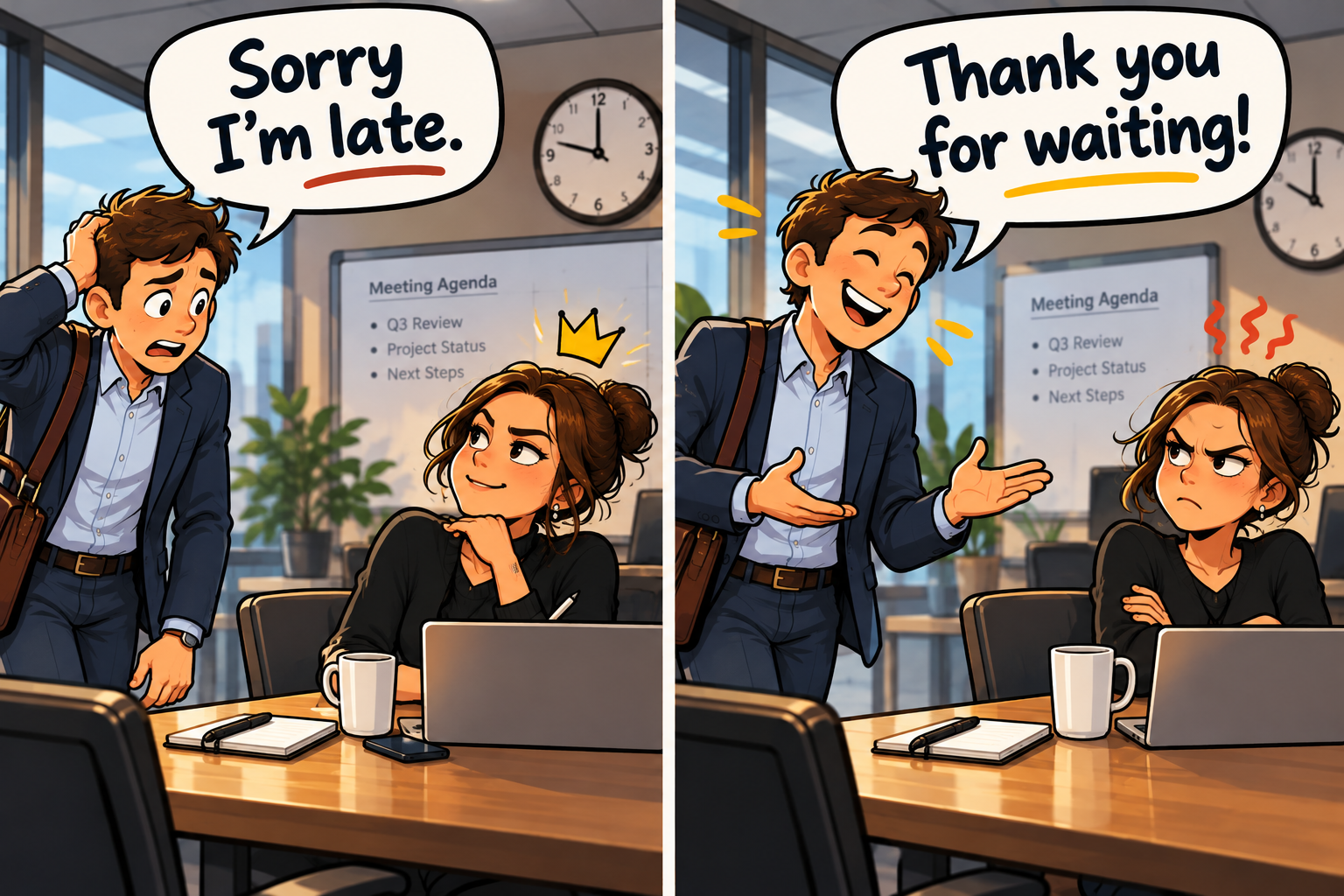
There’s a growing trend to replace “Sorry I’m late” with “Thank you for waiting.”
It sounds like a small change, but consider what it implies.
“Sorry I’m late” acknowledges that I failed to meet an expectation.
“Thank you for waiting” shifts the focus to your patience—as if the problem is how you responded to my lateness, rather than the fact that I was late.
Why does taking responsibility feel like surrendering power, while expressing gratitude doesn’t?
Perhaps we’ve confused accountability with weakness and learned to protect our egos by reframing our failures as someone else’s virtue.
Of course, gratitude matters. But it shouldn’t become a convenient substitute for accountability.
If I fail to respect your time, thanking you for tolerating it doesn’t erase my responsibility.
Real confidence isn’t avoiding “I’m sorry.” It’s being secure enough to own your mistakes without feeling you’ve lost your standing.