The Problem With Selective Simplicity

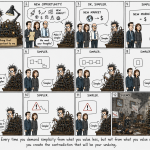
We love to say, “Keep it simple.” But selective simplicity creates a problem. We allow the things we value most to become incredibly complex—because we believe they require expertise, nuance, and sophistication. Then we demand that everything around them be simple. That contradiction costs more than efficiency. It costs trust, integrity, and ultimately your brand. …


The Win Is the Learning, Not an attained Goal!

We celebrate too early. Hitting the goal feels like a win, but a result alone doesn’t prove that we actually learned anything. If the same mistakes show up the next time we try, then the first “win” was really just a temporary outcome. The real win comes when we achieve the next goal without repeating …

When Your MBR Can Only Report Wins, Goodhart’s Law Goes on Steroids

Imagine a Monthly Business Review of Pearl Harbor. The presenter walks into the room with a confident smile. “Overall, a pretty successful month. Our team showed great resilience.” Ten air-to-air wins. Ten ground-to-air wins. Thousands of servicemen healthy and ready for deployment. A new reef system seeded in the harbor. Green checkmarks everywhere. Sounds pretty …

The Iron Triangle: You Can’t Have It All

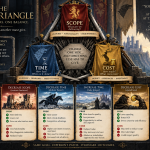
Everyone wants the project delivered faster, cheaper, and with more features. The problem? The laws of project gravity still apply. The Iron Triangle—Scope, Time, and Cost—is one of the simplest ways to understand why projects go sideways. Change one side of the triangle and you put pressure on the other two. Want more scope? You …

There is no End only Next!!

While that vast majority of information technology strategy for internal back office capability’s enablement is taken from a Rolling Stones Song lyric “ you can’t get what you want you get what you need “ (paraphrased for effect) the reality is for technology and business teams alike the real question great architects should always ask …

Possibility of possible

Probability has little to do with possibility. Something does not have to be probable to be possible. If something is possible, time spent exploring it is never wasted. The outcome may not be what you expected, but the exploration creates knowledge, options, and often the possibility of something you could not see before. Probability tells …